What stopped Justinian rebuilding Rome?
Justinian had almost rebuilt Rome. Then a flea arrived on a grain ship from Egypt.
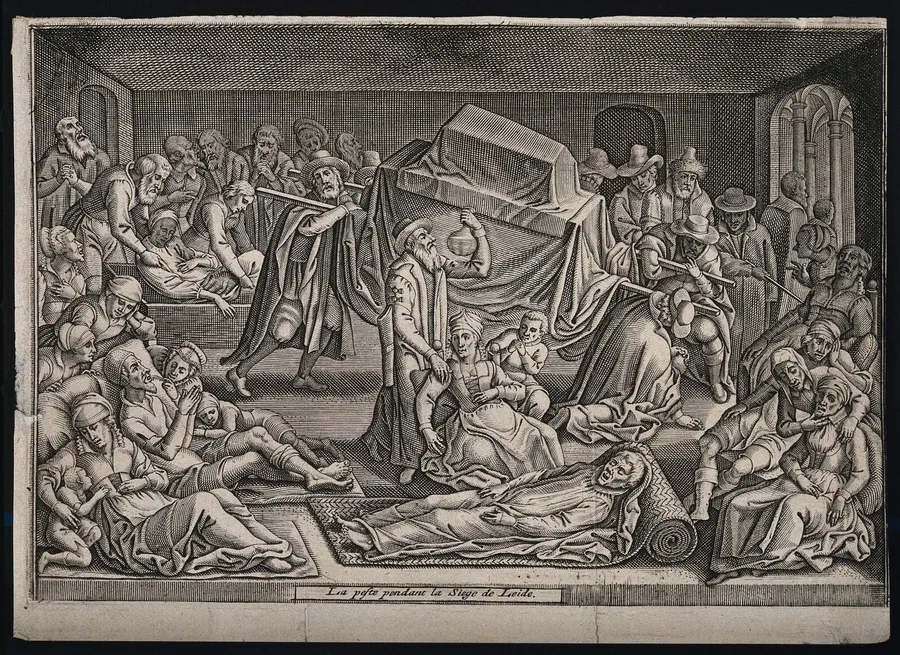
“It was not Justinian's armies that determined the fate of Western civilisation, but the tiny bacterium that brought his grand project to an unceremonious halt.”
“Those whom the gods wish to destroy, they first make mad.” — Ancient Greek Proverb
Emperor Justinian stood at the precipice of greatness. In 541 CE, he had spent over a decade reuniting the fractured Roman Empire, reclaiming North Africa, Italy and Spain. Victory was within his grasp; as the Mediterranean would once again be a Roman lake, and the glory of Rome would be restored. But the gods, it seemed, had other plans. From the port city of Pelusium in Egypt, an invisible enemy crept into Constantinople, spreading faster than any army Justinian had ever faced. The bubonic plague, the first recorded pandemic in human history, would kill up to 50 million people, shatter Justinian’s imperial dreams, and change the ways of Western civilisation; it would pave the way for a new power to rise from the Arabian Peninsula and redirect the course of history forever.
When the plague reached Constantinople in the spring of 542 CE, it found a city unprepared for its fury. Procopius, a contemporary historian, described the horror in chilling detail: “The disease… did not come in a single form, but appeared in many different shapes… Some died immediately, while others died after many days.” The bacterium, named Yersinia pestis, would not be identified until the 19th century and was carried by fleas living on black rats. These rodents travelled aboard grain ships from Egypt, the empire’s breadbasket, infecting port cities and then spreading inland through trade routes. The plague’s symptoms were gruesome and unmistakable. Victims developed painful buboes, swollen lymph nodes in the groin, armpits, or neck that would turn black and burst. Fever, delirium, and vomiting of blood followed soon after. The disease was so contagious that Procopius wrote of victims “dying without any attendants, as if the plague had made them all equal.” At its peak, the plague was killing over 10,000 people each day in Constantinople alone. The emperor himself contracted the disease but miraculously survived, a fact that only deepened the theological confusion of the time. If God had spared Justinian, why had he punished his people so severely?
From a biochemical perspective, the plague was a perfect storm of bacterial efficiency. Once introduced into the body through a flea bite, the bacterium uses a Type III secretion system, a microscopic molecular syringe, to inject virulence factors into immune cells, disabling their ability to respond. Macrophages, the immune system’s first responders, are effectively paralysed, allowing the bacteria to replicate unchecked. The bacterium then spreads through the lymphatic system, causing the characteristic buboes, before entering the bloodstream to cause septicemia and, in pneumonic cases, being transmitted directly between humans through cough droplets. Modern biochemists understand that it produces a toxin called lipopolysaccharide that triggers a massive inflammatory response, which we now call a cytokine storm. This biochemical chain reaction leads to fever, blood clotting disorders, and the eventual multiorgan failure that proved fatal for the majority of victims. The plague’s ability to overwhelm the immune system so completely is what made it so devastating, especially to populations with no previous exposure to the disease.
For Justinian, the plague could not have come at a worse time. His armies had been on the verge of final victory against the Ostrogoths in Italy, and the empire’s treasury was full. Within months, everything unravelled. Agricultural production collapsed as farmers died, trade ground to a halt, and tax revenues plummeted. The military, its ranks thinned by plague and its supply lines disrupted, was forced to adopt a defensive posture.
The plague’s most consequential effect, however, was the weakening of Byzantine control over its eastern provinces. Egypt, Syria, and Palestine were the hardest hit by the pandemic, their populations decimated and their loyalty to Constantinople severely tested. The imperial government, struggling to rebuild, imposed heavy taxes on these provinces to fund its military campaigns, a move that bred widespread resentment. When the armies of Islam burst out of the Arabian Peninsula in the 630s, they found a Byzantine Empire that was a shadow of its former self. The plague had not only reduced the empire’s population but had also drained its treasury and sapped its will to fight. The eastern provinces, exhausted by decades of plague and heavy taxation, offered little resistance to the new invaders. Many local populations even welcomed the Arabs as liberators from Byzantine rule. The rise of Islam, one of the most transformative events in world history, would reshape the Mediterranean and beyond. Islamic scholars preserved and expanded upon Greek and Roman knowledge, developing advances in medicine, mathematics, and astronomy that would later fuel the European Renaissance. The Islamic world became the bridge between antiquity and the modern age, a bridge that might never have been built if the Byzantine Empire had remained strong enough to resist the initial Arab expansions.
The Plague of Justinian fundamentally redirected Western civilisation in ways that continue to echo today. The Byzantine Empire never recovered its former strength, spending the next several centuries fighting a defensive war against Islamic, Slavic, and Turkish forces. The unity of the Mediterranean, a project that had driven Roman policy for centuries, was permanently broken.
The story of the Plague of Justinian offers sobering lessons for our own era. It demonstrates that disease can be as powerful a force in history as any army or emperor, perhaps even more powerful. It shows that pandemics have the capacity to redirect history, topple empires, and remake entire civilisations. Most importantly, it reminds us of the fragility of human achievement in the face of nature’s invisible threats. As we grapple with our own pandemics and their aftermath, we would do well to remember Procopius’s account of those dark days in Constantinople. The plague, he wrote, “made all men equal,” a reminder that disease is no respecter of power, wealth, or ambition. In the end, it was not Justinian’s armies that determined the fate of Western civilisation, but the tiny bacterium that brought his grand project to an unceremonious halt. Perhaps the ancient proverb had it right: the gods do not simply destroy those they wish to punish; they first offer them greatness, only to show how easily it can be taken away.
References
-
Procopius. History of the Wars. Translated by H.B. Dewing, Loeb Classical Library, 1914.
-
Wagner, David M., et al. “Yersinia pestis and the Plague of Justinian 541–543 AD: A Genomic Analysis.” The Lancet Infectious Diseases, vol. 14, no. 4, 2014, pp. 319-326.
-
Little, Lester K., editor. Plague and the End of Antiquity: The Pandemic of 541-750. Cambridge University Press, 2007.
-
Harper, Kyle. The Fate of Rome: Climate, Disease, and the End of an Empire. Princeton University Press, 2017.
-
Sallares, Robert. “Ecology, Evolution, and Epidemiology of the Plague.” Past & Present, vol. 190, no. 1, 2006, pp. 19-47.
-
Stathakopoulos, Dionysios. Famine and Pestilence in the Late Roman and Early Byzantine Empire. Ashgate, 2004.